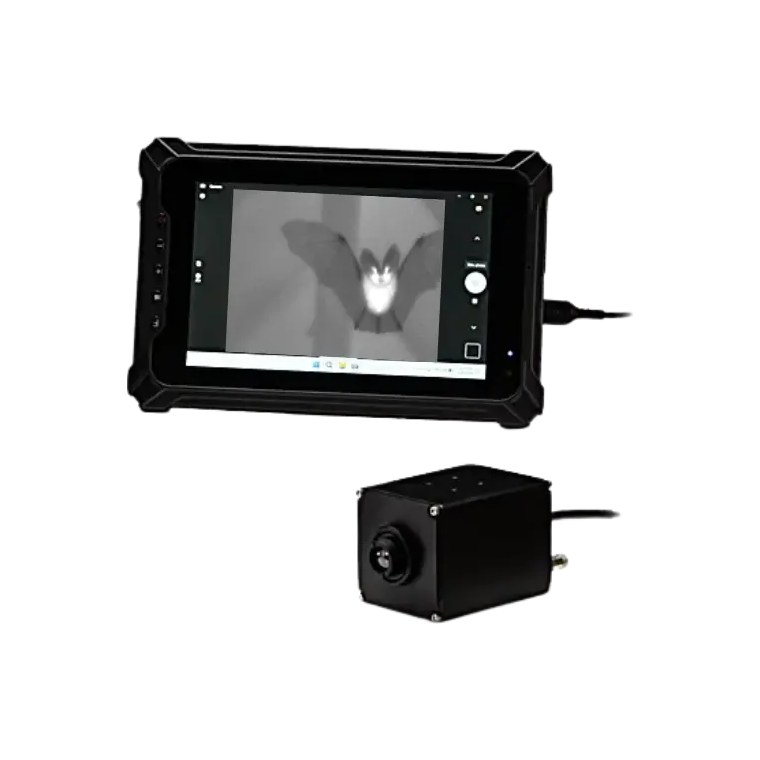
Field Deployment

Camera Selection Guide

If a video is good enough for you to count by eye, ThruTracker can count it. So the real question for any camera is simply whether it gives you a clean, countable image of your bats.

The best camera for the job comes down to your roost, your budget, and how dense the emergence is — the profiles below cover what we've used and where it's worked. Expand any camera for the full review, specs, and sample footage.

Used a camera for bats? Share what worked — species, roost, and even a short video sample. It's how this guide grows.

Help us grow this →
Camera type
Manufacturer
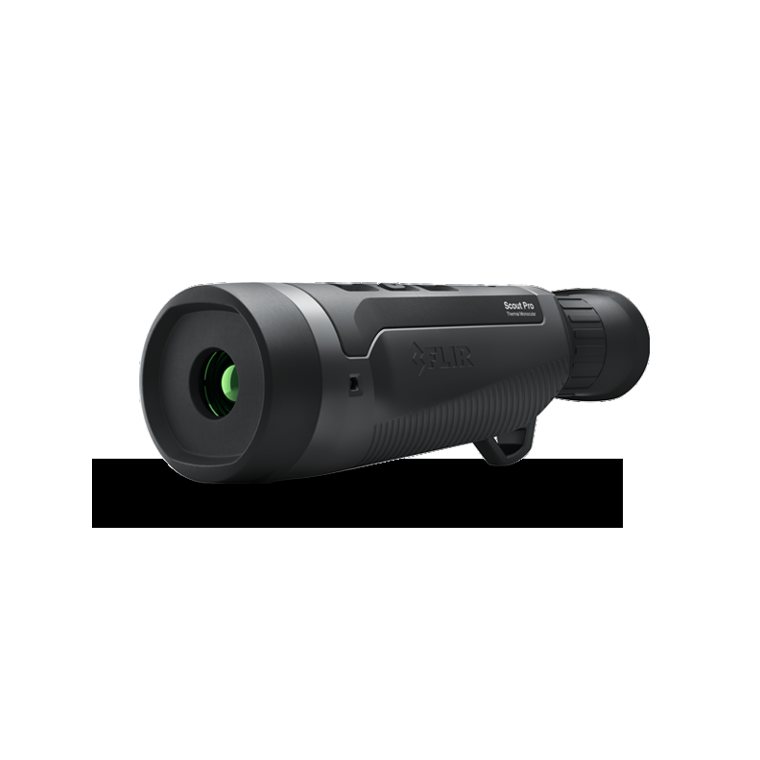
FLIR Scout Pro thermal monocular
★ Top recommendation Thermal Vetted by ThruTracker ✓ ThruTracker Recorder

FLIR Scout Pro

FLIR

Our top recommended camera for use with ThruTracker. 640×480 at 30 fps with a 32×24° field of view, a rugged housing built for real field nights, and it works either stand-alone or tethered to the ThruTracker Recorder app — the combination that makes it the most versatile camera on this page.

640×48030 fps32×24° FOV~$2,449WindowsStand-alone recordingFLIR product page ↗
Full reviewShow less

This is the camera we reach for first. The 640×480 sensor gives you roughly four times the pixels of an entry-level thermal, so bats stay resolvable at longer working distances and stay separable from one another in dense emergences — which is exactly where lower-resolution cameras start merging bats into blobs and under-counting. The 32×24° field of view is wide enough to frame a whole cave mouth, building face, or bat box from a practical standoff distance without having to back so far off that the bats shrink into noise.

It is also built to survive a field season: a sealed, weather-resistant housing, real physical controls you can run in the dark with gloves on, and internal batteries that carry a full emergence without a tether. That durability matters more than spec sheets suggest — this is a camera that goes to caves, bridges, and treelines in the rain and keeps working.

Stand-alone or with the Recorder. The Scout Pro records on its own to internal storage, so you can carry it to a roost with nothing else in your hands, and it's also fully supported by ThruTracker Recorder on Windows — which gives you live brightness and contrast control and a clean, drop-free recording pipeline optimized for tracking. Use whichever fits the night; both produce video ThruTracker counts well.
⚠ Do not connect the FLIR Scout Pro to an Android device — it is known to kill the Scout Pro's battery. Use the Scout Pro with the Windows version of ThruTracker Recorder only.
Used successfully on
Myotis grisescens Caves Buildings Bat boxes Dense emergences Vegetated tree roosts
TopDon TC002C Duo thermal camera
Thermal Vetted by ThruTracker ✓ ThruTracker Recorder

TopDon TC002C Duo

TopDon

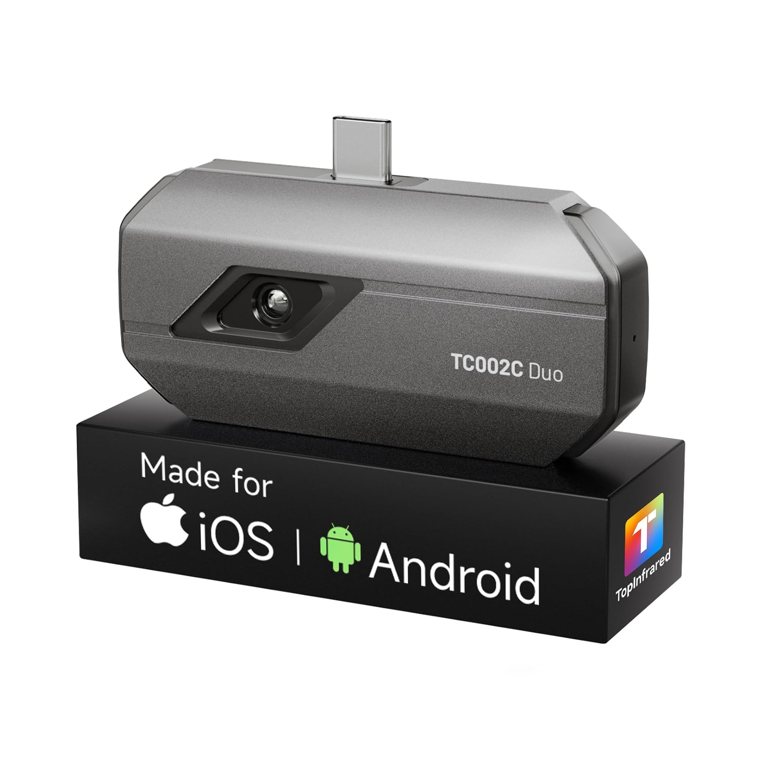
The budget entry point. At 256×192 you give up image quality and working distance, but under the right conditions — sparse emergences, a known exit, close range, cool background — counts can be as accurate as a high-end device.

256×192up to 25 fps50×37° FOV~$240Windows & AndroidBuy on Amazon ↗
Full review & videoShow less
Review video

The TopDon TC002C Duo thermal imaging camera is a really nice entry level option for recording bats. The TopDon is not going to have the image quality of a higher level device and has some limitations in recording, but is a good option for filming bats on a budget. This camera is a good option for situations where there is a low volume of bats (like a Myotis emergence where you only see 2-3 bats emerging at a time), when you know where the bats are coming from, and the user can get relatively close with the camera. The TopDon is compatible with the ThruTracker Recording Software on both Windows and Android, and can record at up to 25 fps at 256×192 resolution. With the low resolution, the user will need to be relatively close range — within 5-10 yards/meters — for optimal image quality of detections. Under the right conditions (with a cooler simple background and filming with the ThruTracker Recording Software instead of the app that comes with the camera), the performance of counts in ThruTracker with the video quality can be just as accurate as a high end device.

Used successfully on
Low-density Myotis emergences (2–3 bats at a time) Known, single exit point Close range (5–10 m) Cool, simple background
HTI HT-301 thermal camera
Thermal ✓ ThruTracker Recorder Review coming

HTI HT-301

HTI

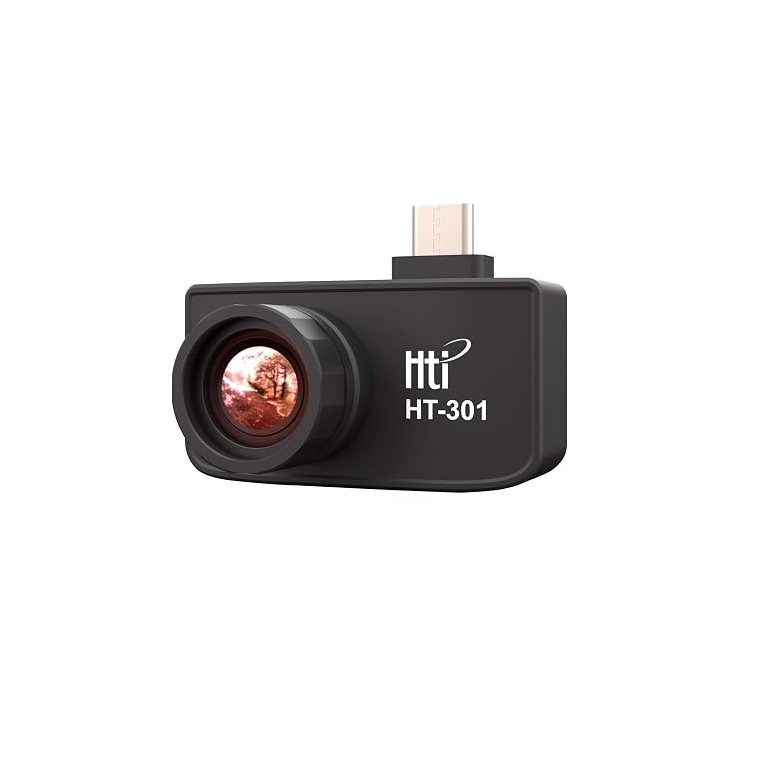
A mid-range thermal that sits between the TopDon and the FLIR on resolution and price. At 384×288 it gives you meaningfully more detail than the TopDon for a fraction of the FLIR's cost, and it works with ThruTracker Recorder — so you get the same brightness/contrast control and clean recording pipeline. Detailed review coming — field reports welcome via the form below.

384×28825 fps28×21° FOV~$652Buy on Amazon ↗
Intertest Infrabat thermal camera and recorder system
Thermal Community feedback

Intertest “Infrabat” System

Intertest

A high-end, research-grade system with interchangeable lenses and a 60 fps frame rate for the most demanding, high-density emergences. The IP67-rated housing is built for long unattended deployments in weather. Detailed review coming — field reports welcome via the form below.

640×51260 fpsmultiple lensesIP67~$13,000Intertest product page ↗
Near-IR

Near-infrared cameras

Lighting is key — you'll usually need IR illumination — but near-IR can be an advantage in situations with a hot background that would wash out a thermal camera. Field reports welcome via the form below.

HD 1920×108030 fpsIR illumination required
Visible

Visible-light cameras

Standard HD cameras can work when you have a clear sky backdrop behind the roost so the bats stand out. Sky brightness at the time of emergence is the limiting factor — once the sky goes dark, you're done. Field reports welcome via the form below.

HD 1920×108030 fpsSky backdrop needed

No cameras match that combination yet. Try “All”, or send us feedback below.

Help us grow this

Used a camera that isn't here?

Tell us about a camera you've tried for bats — good or bad, and the species and scenario it worked for. Attach a short clip if you have one. We'll fold real-world feedback into this guide (and credit the community).

A few seconds of the quality it produces is plenty. Large file? Paste a link below instead.